If you’re embarking on a research journey, whether it’s a PhD proposal, a dissertation, or even a funding application, you’ve probably heard this before: “Start with a solid literature review.” But what does that actually mean? And how do you make sure it’s more than just a list of books and articles? A great literature review is not only informative; it’s analytical, relevant, and well-structured. It maps out existing knowledge, reveals gaps in the field, and justifies why your research matters.
In this guide, I’ll break down the process into clear, manageable steps. I’ll share outline templates, practical examples, and advice on citation styles (yes, even APA!). Whether you’re writing for a dissertation or crafting a research proposal, this post will help you avoid the most common pitfalls. Ready to tackle your literature review with confidence? Let’s go.
What is a Literature Review?
A literature review is a critical synthesis of existing research related to a specific topic. Rather than summarising each study one by one, a good literature review brings together key findings, debates, and gaps. It organises scholarship based on common threads. It demonstrates your understanding of the academic landscape and shows where your work fits in.
Think of a literature review like recalling an evolving conversation: who has said what, how have views evolved over time, and what’s still missing? Depending on the scope of your work, you might look at books, academic journal articles, policy reports, or even credible media sources. Make sure to analyse your sources critically, identifying gaps and biases that your project aims to tackle. Use a reference management software like Mendeley to organise your sources.
Remember, this is not a data dump. The aim is to be selective, analytical, and coherent. As you read, take notes on recurring themes, disagreements, methodologies, and theoretical frameworks. A great review doesn’t just prove you’ve read a lot, it shows that you’re understanding the field as a whole and you’re positioning yourself clearly within it.
🗂️ Organising your Literature Review
Not sure how to structure your literature review? Here are a few tried-and-tested approaches:
- By Theme: Group sources based on recurring ideas or concepts.
- By School of Thought: Organise literature by theoretical perspective.
- By Methodology: Compare and contrast studies using different research methods.
- Chronologically: Show how thinking has evolved over time, good for topics with a long academic history.
- By Geography or Case Study: Useful when comparing findings across different regions.
- By Debate or Controversy: Highlight where scholars agree, disagree, or where there’s tension in the field.
Choose one structure (or combine a few) to best support your argument and make the review easy to follow.
How to Write a Literature Review for a Research Proposal?
When writing a literature review for a research proposal, your goal is to demonstrate that your study is both necessary and feasible. The review should highlight what has already been done and show how your project will offer something new. Funders and supervisors want to see that your research is grounded in existing knowledge, but not redundant.
Keep it focused. You don’t need to include every article ever written on your topic. Instead, pick the most relevant and recent works (generally within the past 5–10 years) and organise them thematically or methodologically. It’s also helpful to briefly critique existing studies. What are their limitations? How will your approach build on them or offer an alternative? Use the literature review to justify your research questions and methods.
Pro tip: Tailor the tone of your review to your audience. If it’s for a policy-oriented grant, be accessible and precise. For an academic review board, show your theoretical awareness and disciplinary knowledge.
How to Write a Literature Review for a Dissertation?
A dissertation literature review is usually longer and more detailed than one written for a proposal. It forms a whole chapter (often the second one) after your introduction. For reference, the Literature Review chapter of my PhD dissertation was 50 pages long. The purpose here is to situate your research within the broader academic landscape and justify your theoretical and methodological choices.
Start by narrowing your scope. Define your topic clearly and list keywords that guided your search. Then group the literature into themes, approaches, or debates. It’s not enough to just present what each source says: your job is to interpret, compare, and critique them. You need to give a very comprehensive overview of the state of the field. Ask yourself: How has this topic evolved? Which scholars or schools of thought dominate the field? Are there gaps or contradictions? How do these inform your research design?
Finally, make sure your review flows logically. Transitions between paragraphs should guide the reader through your reasoning. And don’t forget to end with a short summary that links the literature to your own study. It’s your springboard, not your backdrop.

Let's dive in together!
I would love to accompany you on your journey to academic excellence. Together, we’ll define your goals and materialise them into a concrete plan of action.
My experience builds on a decade in academia and numerous experiences leading research projects and working in teams of ambitious individuals seeking to make a difference to this world, without sacrificing their health and happiness.
Academic Coaching • Goals Setting • Career Advice • CV feedback • Personal Growth • Productivity
Literature Review Outline Template
A good literature review is not a catalogue, it is a conceptual map that frames a precise question and positions your research as a way of unlocking new knowledge. This outline helps you do just that, moving beyond listing what exists toward showing what is missing, and why it matters.
Here’s a flexible structure you can adapt:
1. Introduction
- Start with the purpose and scope of your research project. Explain clearly: What does this literature review aim to uncover, critique, or establish? State your research question(s), the gap you’ll aim to fill through this new research venture.
- Justify your choices: Why is this question interesting and answerable? What makes it worth asking now, and what view might it reveal that we don’t yet see?
- Show relevance: Your research question(s) must not just show what’s unknown; it should matter that it’s unknown, and it should be crucial to answer it now. Be bold. What important idea lies just out of reach?
2. Conceptual Foundations
Define key terms and concepts in your field of inquiry.
Outline the theoretical lenses or frameworks used to engage with them.
Clarify your own interpretive position if relevant (e.g., constructivist, realist, critical, post-structural).
Here, you are not just citing definitions, you are positioning your work in the broader scholarship. Let the reader know where you’re standing, i.e. what you are assuming when tackling your central research question(s).
3. State of the Field
Identify the major debates, schools of thought, or thematic clusters that have shaped this research area.
Highlight what has already been mapped and where different researchers have focused their energies.
Use subheadings to organise this section around questions, not chronologies or names. Structure by conceptual tensions, methodological divides, or analytical frames.
4. Gaps, Tensions, and Opportunities
Where is the horizon of the unknown? What has not been asked, or what has been asked poorly?
Are there unresolved tensions, blind spots, outdated assumptions, or misalignments between theory and evidence?
Which research avenues have been prematurely closed, or never opened?
This is the heart of your review. Don’t stop at summarising: show your reader what’s missing and make a compelling case for why your project matters.
5. Contribution
Describe how your research intends to contribute: conceptually, methodologically, or empirically.
Will it revise existing categories? Introduce new ones? Apply old questions to new cases, or new questions to old ones?
How does it push the boundary of what is known, however slightly?
This is your moment to show that you are not just learning, you are researching. Articulate your working hypothesis, even if tentative. Signal where you will begin to look for answers.
6. Conclusion
Summarise key insights from the literature.
Reaffirm your research question and its significance.
Indicate how the review has sharpened or clarified your project’s intellectual trajectory.
Your literature review is not the prelude to your research. It is research: it is where you locate your question, test your assumptions, and begin to think new thoughts. Use it to show that your project is not just feasible, but valuable.
Academic Writing Handout
Basedf on my experience as Lecturer at Leiden university, I’ve developed this Academic Writing Handout. Yes, it’s 100% free! It contains precious tips and advice gathered over a decade in academia. It is a step-by-step guide on how to write excellent academic papers at university.

Literature Review Examples
Seeing examples is one of the best ways to understand what a successful literature review looks like. You can find solid samples in:
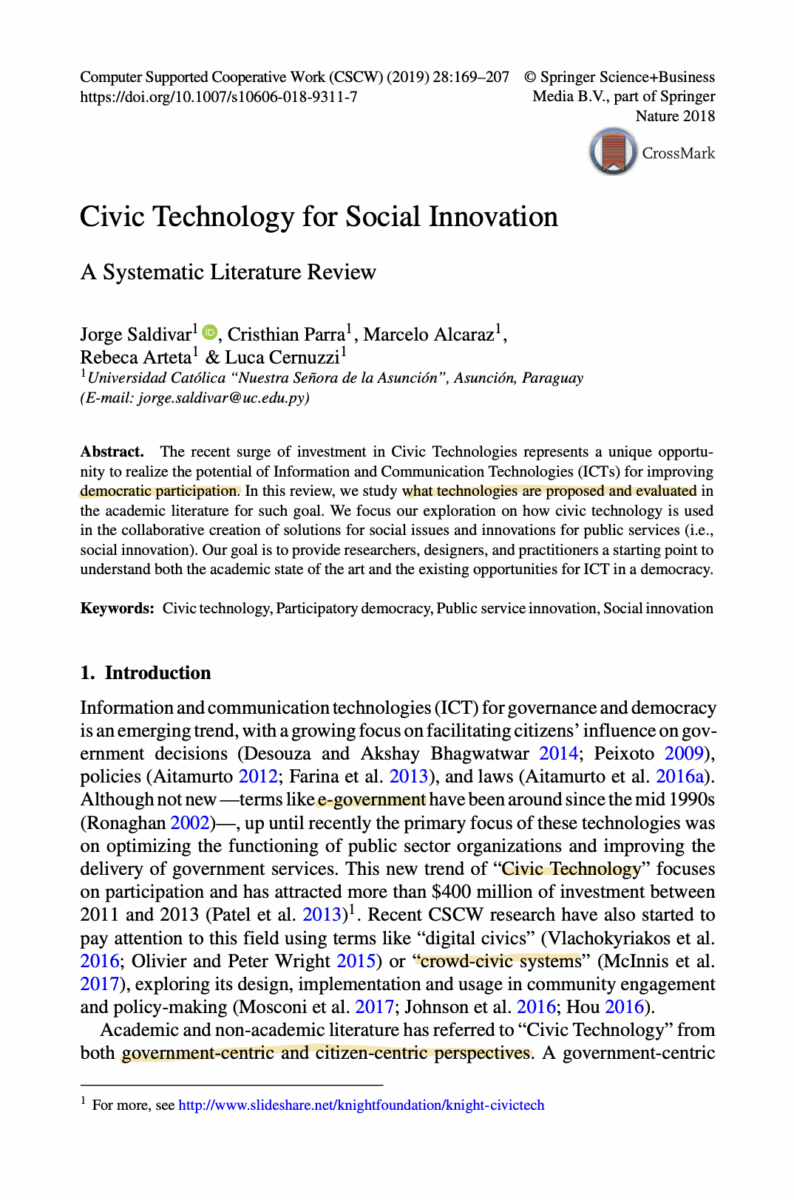
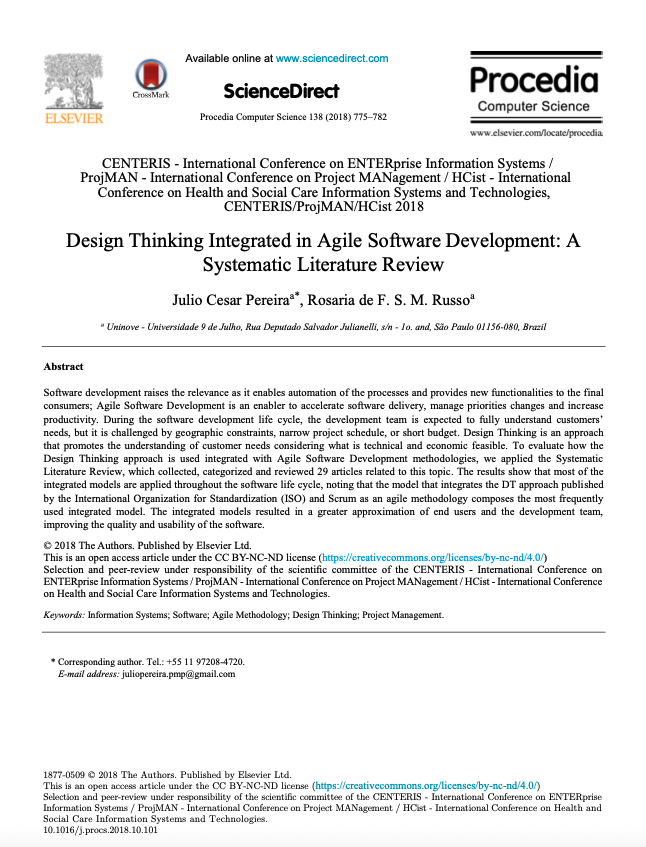
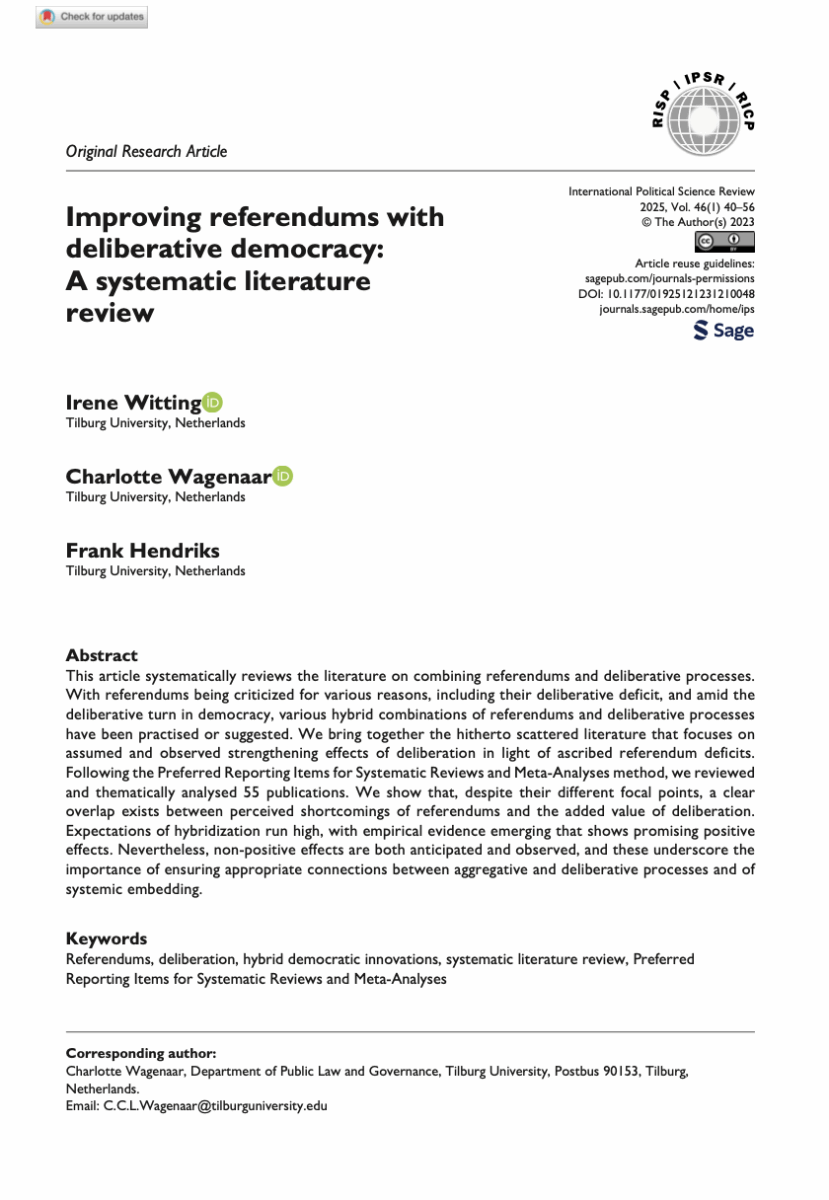
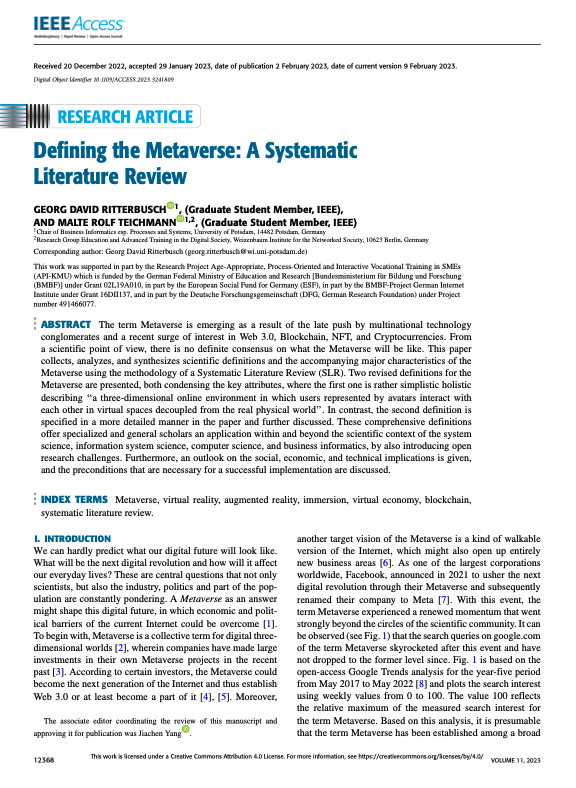
Open-access academic journals like SAGE Open, PLOS ONE, or Frontiers
University repositories, which often host theses and dissertations
Google Scholar, by filtering for review articles in your field
Look at how the literature reviews are organised (see open-access examples below). Pay attention to tone, transitions, and how authors link each section to their research aims. Notice how they balance summary with critique.
For beginners, I also recommend finding a review paper in a familiar subject. Read it twice: first for the big picture, then for structure and citation style. This approach will give you a practical sense of how to move from bullet-point notes to polished prose.
Common Mistakes to Avoid
I’ve seen many students fall into the trap of treating the literature review as a summary rather than a critical engagement. A common mistake is writing a list where you describe what each author says without analysing how their ideas interact. Another pitfall is hiding behind phrases like “the literature shows” to sound objective, which risks obscuring your own voice. A strong review requires interpretation, synthesis, and the courage to take a position.
Some students play it too safe, asking questions simply because they are answerable with familiar methods. But “safe” often means irrelevant. Aim instead to ask questions that matter, questions that challenge assumptions or open new directions. Be careful, too, not to confuse the absence of research with a genuine gap. Just because something hasn’t been studied doesn’t mean it should be. A real gap is one where something significant is missing; something that, if studied, would change how we understand a problem.
Finally, don’t treat your review as background or preamble. It is the intellectual foundation of your project. Use it to shape the field and justify your intervention. In sum:
Don’t list; analyse.
Don’t echo; evaluate.
Don’t hide; take a stance.
Don’t fill space; identify significance.
Don’t be safe; be curious.
Your goal isn’t just to show you’ve read widely, but to think boldly. Think: What should be asked? What’s been overlooked and why?
Different Citation Styles (e.g. APA, MLA, Chicago, Harvard)
Citing sources properly is essential in any literature review. Not only does it give credit to other researchers, it also shows academic integrity. Here’s a quick breakdown of common styles:
APA (American Psychological Association): Widely used in social sciences. In-text citations look like (Smith, 2020).
MLA (Modern Language Association): Common in humanities. In-text citations use the author’s last name and page number.
Chicago Style: Often used in history and political science. Allows for footnotes or author-date citations.
Harvard: Similar to APA but with different formatting.
Always check your department or journal’s preferred style. Tools like Zotero, Mendeley, or EndNote can help manage your citations automatically. You can also use generators like Citation Machine or ZoteroBib to format references quickly.
Final Tips
A great literature review doesn’t aim to impress with quantity, but to persuade with clarity and purpose. Rather than covering everything ever written, focus on what matters most for your research question. Depth beats breadth. Show your reader not just what the literature says, but why it matters and where you fit in.
Use your own voice to guide the reader. Phrases like “this article argues” or “scholars disagree on…” are more transparent than vague summaries. Good signposting can make even a dense review easy to follow. Think of yourself as a curator: what you include, what you exclude, and how you arrange it all tell a story about the field.
Keep your structure simple but strategic. There’s no single correct way to organise a literature review, but whatever format you choose, it should help you build an argument, not merely present information. And remember: your literature review is not something you “get out of the way.” It is your research in conversation with others.
Finally, write with the reader in mind. Avoid jargon, explain your reasoning, and stay focused on your core question. Ask yourself throughout: Am I helping the reader see what’s at stake? Why does this gap matter? What do I bring that moves the conversation forward?
In short: be clear, be selective, and be brave.

Your journey starts here
I offer on-on-one coaching services to individuals who seek to adopt the mindset that will help them achieve their full potential. Interested? Book a free 15-min consultation with me!
Academic Coaching • Goals Setting • Career Advice • CV feedback • Personal Growth • Productivity