As a researcher specialising in misinformation, I’m often asked: how can I keep up with what’s happening in the world, without getting lost in propaganda or doomscrolling? The good news is you don’t need a PhD to be media literate. You just need curiosity, a few trusted tools, and the habit of asking good questions. In this guide, I’ll share how to stay informed about current events, without burnout. From smart news sources to critical thinking strategies, this post is your practical compass in a noisy world.
1. Choose quality over quantity
First and foremost, you don’t need more news, you need better news. A major part of staying informed about current events is filtering out the noise. I recommend regularly clearing your news feed from click-bait content and sensationalist headlines (shocking, fear-inducing, …). Instead, follow a small, trusted set of sources that combine in-depth analysis, factual accuracy, independence, and transparency. My personal go-to platforms and news outlets include:
Reuters : Fast, reliable global updates with minimal narrative and neutral language.
Bellingcat : Open-source intelligence and accountability journalism.
- Ground News : Comparison of US news coverage across political leanings.
- The Conversation: Researchers and scientists decode current affairs.
I also follow the Reuters Institute for the Study of Journalism and Reporters Without Borders for insights into the media landscape and love the work of L’Esprit Critique (in French) to boost critical thinking skills. If you’re on Instagram, check out my post on the best news Instagram accounts. Remember: high-quality reporting may not shout the loudest, but it holds up to scrutiny.
2. Ask questions (and check your sources)
The foundation of media literacy is curiosity and critical thinking. Therefore, don’t just consume headlines, interact with them. When you read a story, ask yourself:
Who published this, and why?
What are their sources? Can I check them myself?
Could they have a political or commercial interest?
- Who paid for this?
What’s not being said?
Be especially cautious with viral content and infographics or charts (which often use made-up data). You can check scientific papers on Google Scholar, verify images through reverse search, and when in doubt, turn to reputable and independent fact-checking organisations. For example, look for national organisations listed on the European Fact-Checking Standards Network.
3. Learn how to recognise manipulation techniques
In a world where fake content has never been easier to produce and share, it’s essential to learn how to recognise common tactics of manipulation. This should empower you to spot sloppy journalism and propaganda, and will help you develop the habit of slow thinking and introspection, underrated superpowers in our fast-scroll culture.
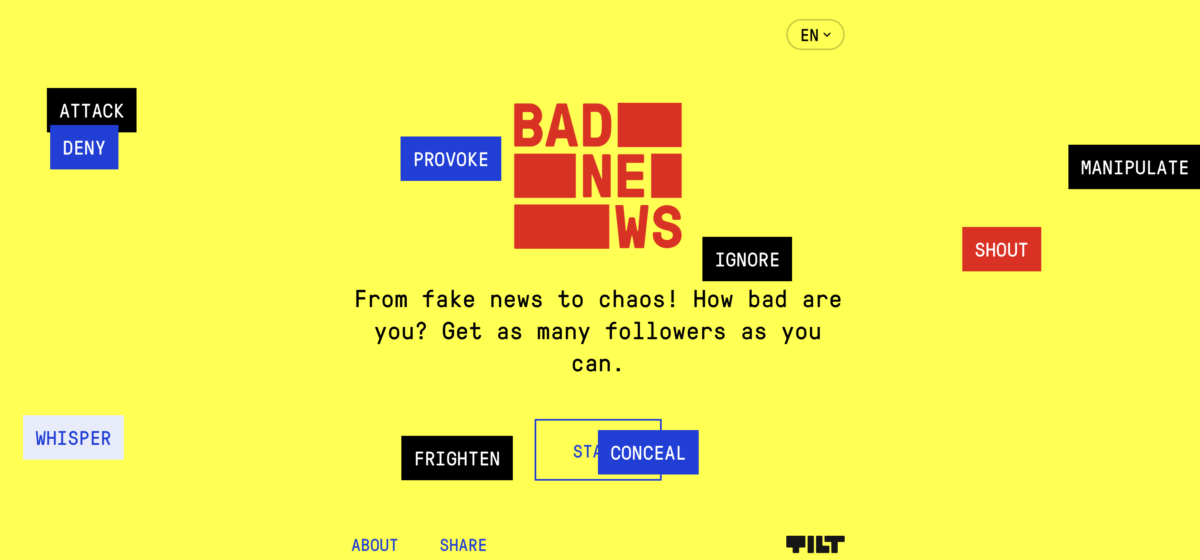
I recommend playing The Bad News Game for a clear and fun way of learning the forces at play in online manipulation. Build by psychology researchers at Cambridge University, the goal of the game is to expose the tactics and manipulation techniques that are used to mislead people and build up a following.
4. Diversify your information diet
One of the best ways to stay informed about current events is to expose yourself to multiple perspectives. Generally, avoid relying on a single outlet, even a good one. We all hold biases in our views (test your implicit biases here), so the best way to stay informed about current events is to diversify the biases that influence us. Read across regions, ideologies, and formats (e.g. podcasts, newsletters, long-form articles). Here are a few ways to diversify:
Consume media from various regions and in various languages, if possible.
Subscribe to international newsletters and outlets (e.g. Courrier International or Le Monde in French).
Use tools to compare media bias in real-time (e.g. Ground News, AllSides in the US)
The goal isn’t to find an outlet you agree with 100% of the time, it’s to understand how different people frame the same story. That understanding builds resilience, empathy, and a sharper eye for manipulation. If you are looking for a complete guide to master information influence, check out my Strategic Communication Toolkit.

Hi! I’m Sophie
I am a social scientist and explorer. In my work, I analyse the intersection of politics, technology, and democracy. Nothing makes me happier than learning and discovering the wonders of the world. I consider myself an enthusiastic feminist and self-care advocate.
5. Read books that sharpen critical thinking
Sometimes the best way to stay informed and understand current events is to step back and rethink how we process information in the first place. Short-form content is entertaining but lacks depth. Books give us space to reflect and build long-lasting critical thinking skills. Here are the books I recommend most:
“Think Again” by Adam Grant : A compelling invitation to question your assumptions and embrace intellectual humility.
“Foolproof” by Sander van der Linden : Explains how misinformation spreads and how we can build psychological immunity against it.
“Democracy and Media Decadence” by John Keane : A sharp critique of how modern media landscapes weaken democratic engagement.
“Making Sense of Media and Politics” by Gadi Wolfsfeld : A practical guide to understanding how media and politics influence each other, and us.
- “Thinking, Fast and Slow” by Daniel Kahneman : A fascinating dive into our ways of thinking, and the shortcomings of our minds.
Each of these books offers tools to become more thoughtful, resilient, and aware in the digital age. This section contains affiliate links. If you make a purchase through one of these links, I may earn a small commission, at no extra cost to you! Think of it as a free gift to support my blog 🤍
Conclusion
So, how do you stay informed about current events without getting overwhelmed, manipulated, or misled? Choose fewer, better sources. Ask questions, verify facts, and check for bias. Learn how to recognise manipulation. Expose yourself to multiple viewpoints and deepen your understanding through books and trusted resources. Most importantly, remember that no single source is ever enough. In an age of fragmented attention and digital manipulation, critical thinking is your anchor. Stay curious, stay open, and trust your ability to learn, unlearn, and re-learn.
Support my work
If you’ve enjoyed reading my blog, learned something new, or found inspiration here, consider supporting me:
Your coffee helps me:
Keep the site ad-free and distraction-free
Spend more time researching and writing
Share even more ideas with readers like you
Whether it’s a one-time coffee or a bigger gesture, your support keeps this space alive, and it means the world to me. 🤍