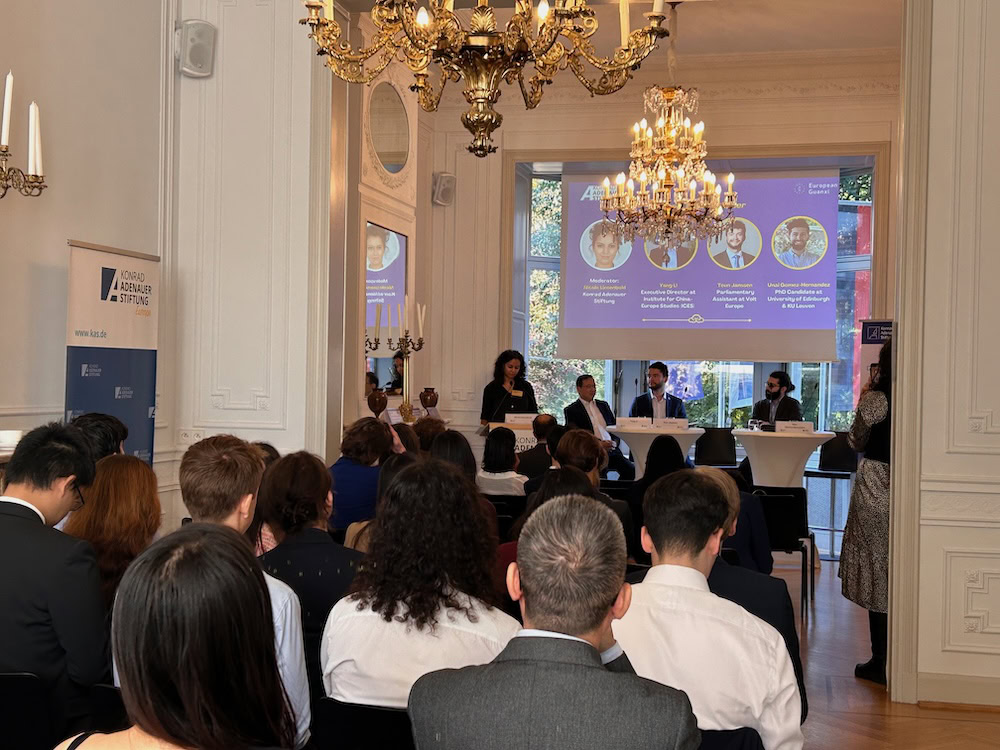
I had the privilege of being invited to speak at the European Guanxi Conference organised in Brussels in September 2025. The event took place the same week as the Shanghai Cooperation Organisation (SCO) Summit in Tianjin and China’s military parade, both of which projected Beijing’s growing assertiveness on the global stage.
The convergence of this timely discussion and geopolitical spectacle illustrates the urgency of rethinking how Europe navigates its relationship with China. It is no longer a simple question of trade or climate cooperation, it is a crucial challenge for the European Union’s sovereignty and continued influence as a global actor.
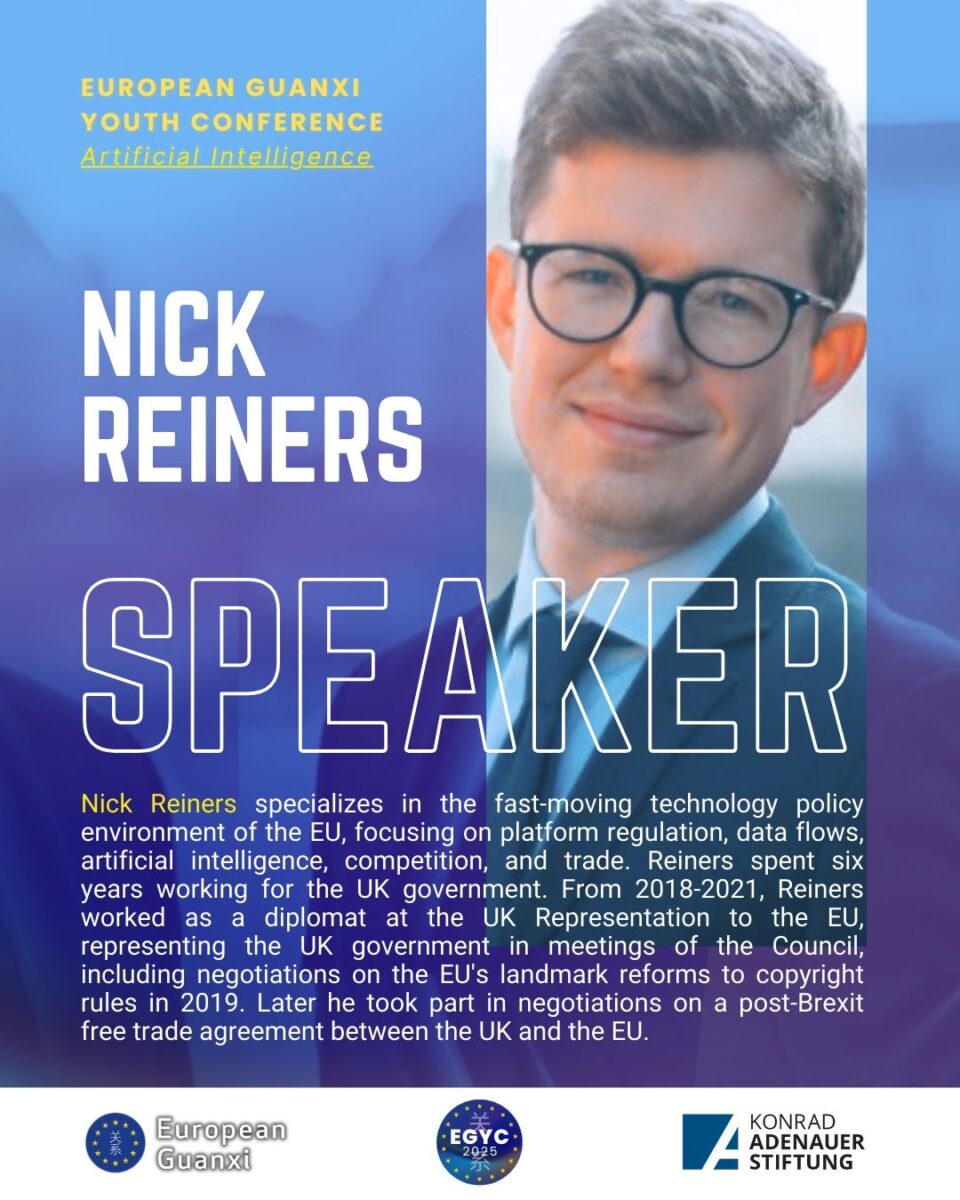
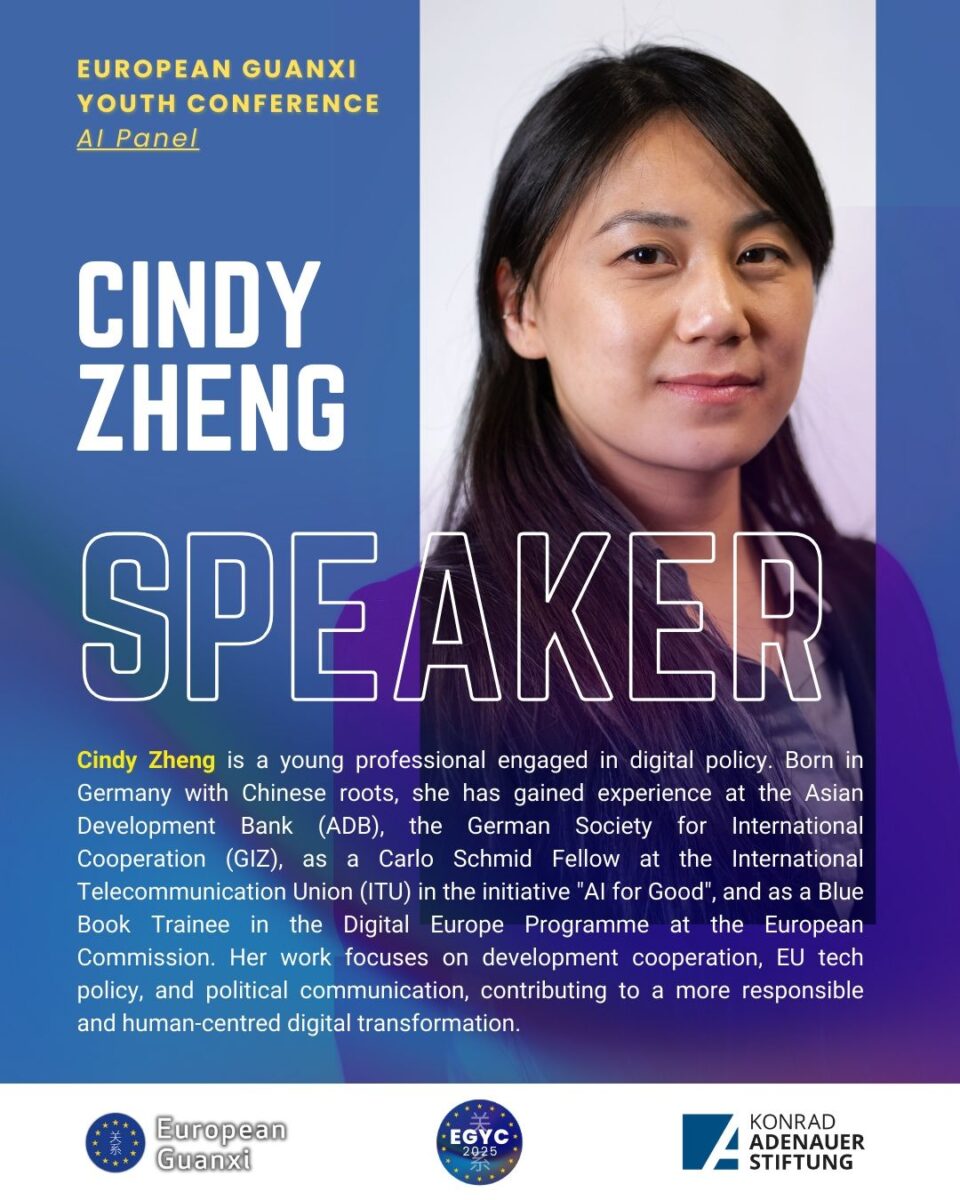
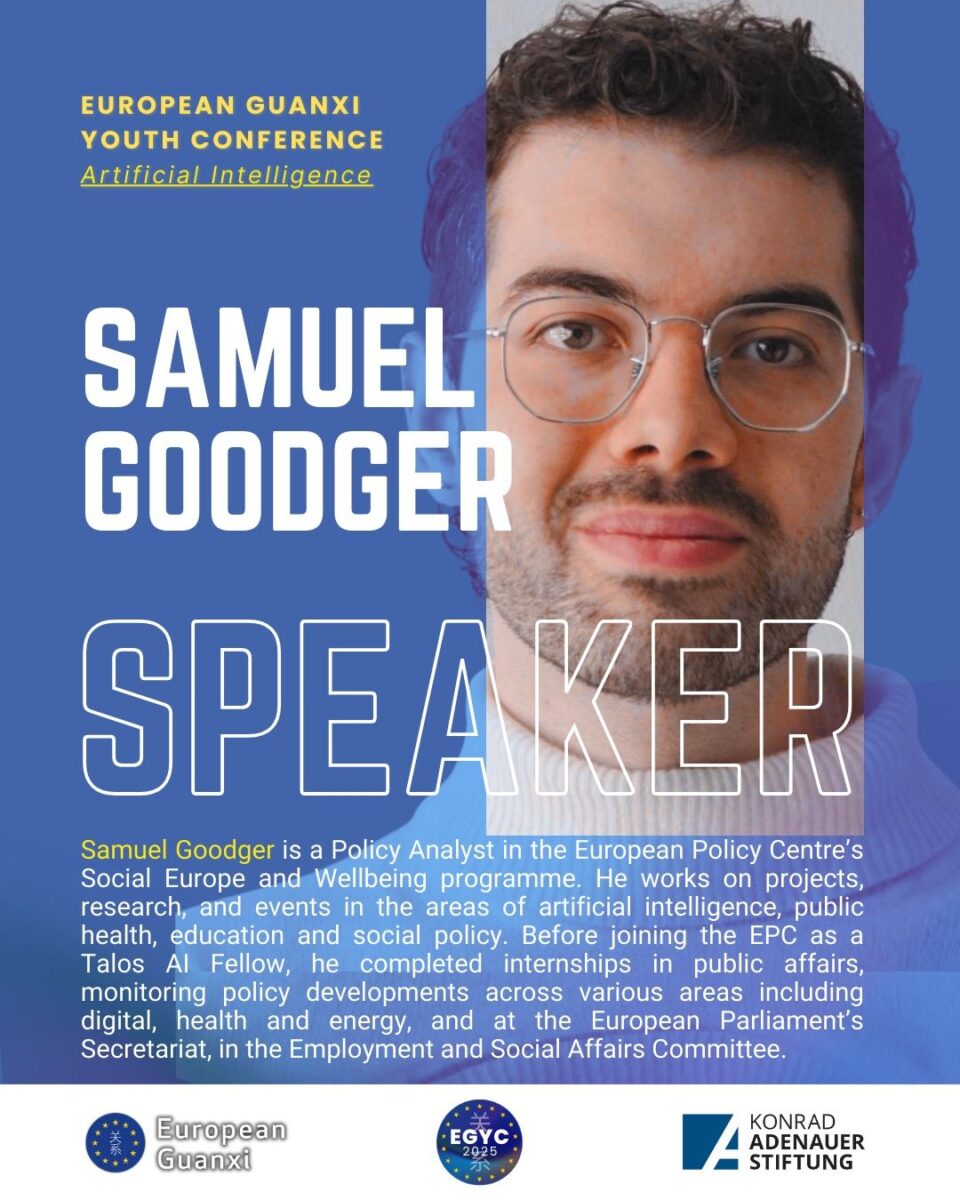
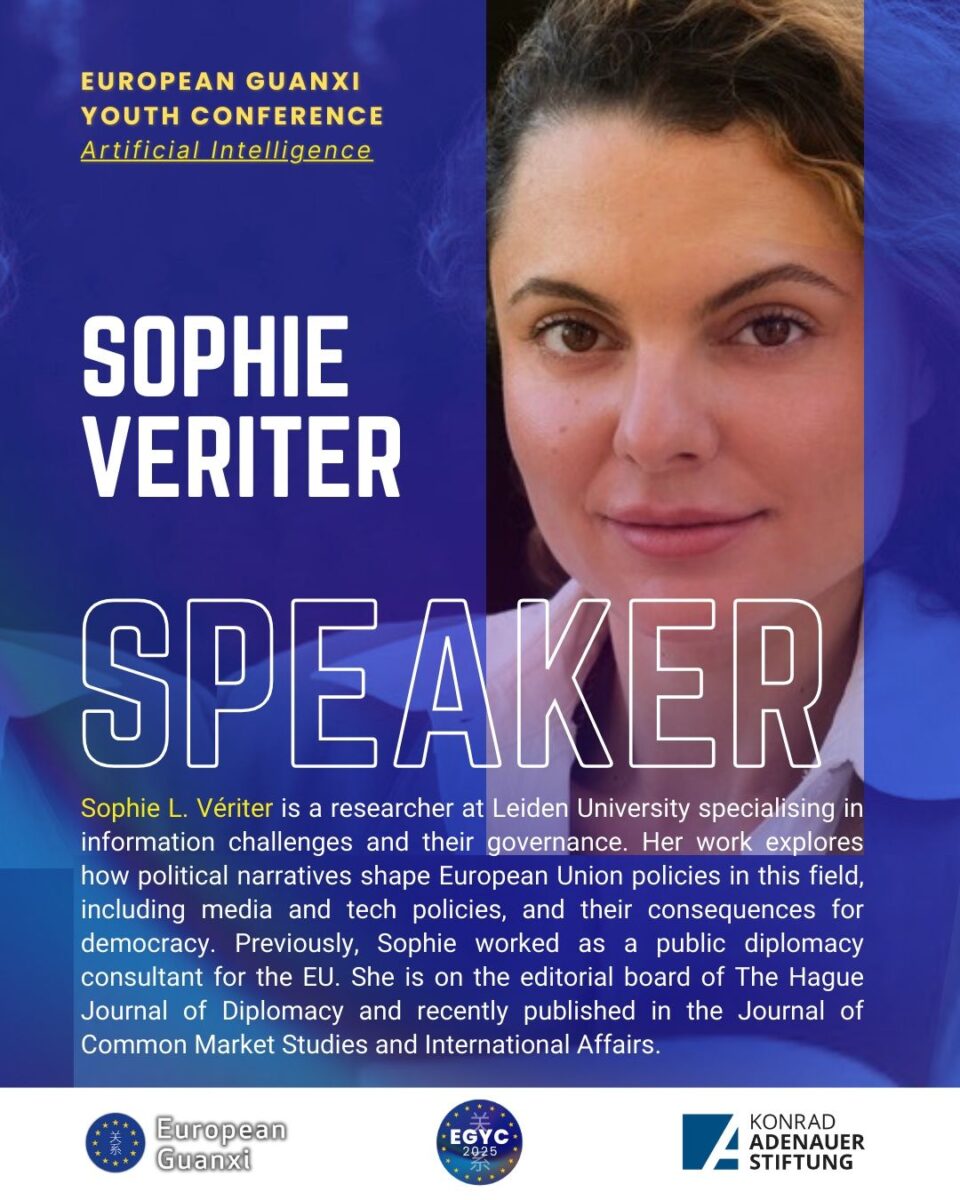
The questions below, brilliantly drafted by Marios T. Afrataions, Co-Founder of The ASEAN Frontier, were asked to the panel on Artificial Intelligence of the European Guanxi Conference, composed of Cindy Zheng, Sam Goodger, Nick Reiners, and Sophie Vériter (myself). The responses are my personal take on them and do not reflect the stance of other experts invited on the panel.
1. The EU sees China as a partner, economic competitor, and systemic rival. Where does AI fit in that complex relationship?
There are so many good answers to that questions.
From my perspective, AI, just like any other technology, can be a vector for further political cooperation or isolation. Some people argue that technology is neutral. I disagree.
In 1980, Langdon Winner’s theory of technological politics already showed us that there are some technologies that are inherently political, because they are linked to certain social or political arrangements. For example, developing nuclear power demands centralised control and expertise of organisations with large-scale infrastructure. Similarly, developing Artificial Intelligence requires vast computational infrastructure, enormous datasets, and very specialised expertise, which concentrates power in the hands of a few governments, corporations, and elite communities. This centralisation creates structures where a small group of actors make decisions that have very large consequences with very little accountability. Langdon Winner also explains that technology can be used as instruments of power, when they are intentionally designed to reinforce certain dynamics shaping social relations. I think we have all seen the polarising effects of social media algorithms throughout the last two decades.
- With this in mind, I see that AI is a very favourable technology for political regimes such as in China, where power is centralised and highly ordered. AI empowers those regime to create more automated surveillance and control systems, allowing the state to monitor, predict, and manage its population with unprecedented scale. In the current AI race, China is not leading (the US is), but it’s a very close second, mostly because of its competitive, open-source software solutions, but also because of the vast data it can collect and the wide-ranging applications it is deploying, for example in e-commerce and smart cities.
- For political regimes that are more decentralised, like liberal democracies, AI also brings opportunities, but more so for businesses and non-governmental organisations, which will also benefit society. In Europe, for example, I see AI as a force for more decentralised, public networks and autonomous organisations that distribute resources democratically. The EU is however clearly lagging behind the US and China in the AI industry, in all layers of the AI tech stack.
So, I suspect that AI will bring very different things to the EU and China. At the same time, AI can be a common transformative force. As I’m sure we’ll discuss more in depth, AI brings all sorts of strategic consequences and dependencies which can disturb the global balance of power. It creates new opportunities for competition and partnership. Overall, AI forces us to rethink the way the world works, it creates new avenues for international relations, and I think that’s a good thing.
2. Is there space for pragmatic engagement between EU-China, or are there new risks created that Brussels needs to manage?
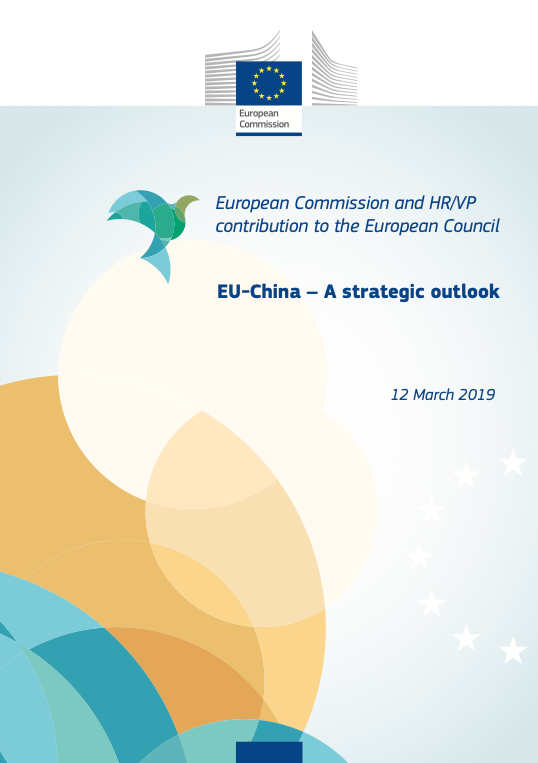
There is already pragmatic engagement. I think the 2019 Strategic Outlook and the EU-China summits show that, even if the relationship has incontestably worsened especially in the context of Russia’s invasion of Ukraine, over which China has remained silent. I see this as the biggest obstacle in EU-China relations.
There are; however, definitely some new risks that the EU needs to manage:
- First, the EU and China have a very different approach to AI regulation. For example, the EU prohibits the use of AI systems such as social credit scoring that are common in China. This makes it hard to establish common standards on privacy, for example, but also complicates the adoption of Chinese products on the EU market because it puts the privacy of European citizens at risk.
- Second, there are risks of technical dependencies, because the EU relies on Chinese supply chain, and economic vulnerabilities, because Chinese subsidises undermine EU competitiveness in the AI industry. As we have seen with Shein, China’s state-subsidised industries create a flood of cheap products on the EU market. This can happen with EVs and other AI-enabled products.
- Third, there are security risks involved with China’s approach to AI, because the technology it is developing can be used (and is used) to bolster military capabilities. The Chinese ‘People’s Liberation Army’ is on track to become the most advanced fighting force, as we’ve been shown at the military parade this Wednesday. This means that the tools for repression or aggression are more dangerous and precise, which calls for exports controls.
Yet, those risks do not preclude a pragmatic and engagement that yields positive results for both the EU and China.
- Both the EU and China support effective multilateralism and want to create international standards for AI safety and interoperability to prevent a global digital divide that would hamper both markets.
- Both are willing to cooperate on using AI to combat climate change, for example by optimising energy grids, which provides a productive ground for dialogue. China is the world’s leader in solar and wind energy applications.
- Both are concerned over the catastrophic misuse of powerful AI models, which creates an opportunity for collaboration on safety research and risk mitigation.
3. Should Europe see Chinese compute as a potential alternative to the US, or would that risk creating new dependencies and clash with the EU’s strategic positioning?
The fact that the EU is currently reliant on US compute — Graphic Processing Units (GPUs) for deep learning, Central Processing Units (CPUs) for machine learning or algorithms, specialised AI chips, but also data storage and network infrastructure — is a problem.
But turning to Chinese compute, for example produced by Huawei (which are by the way nowhere near the capabilities of US giant Nvidia) would be equally problematic. Dependencies are never good, because they create risks.
The best strategy for the EU to reduce those risks is to pursue technological sovereignty by building a robust domestic compute ecosystem.
4. China is actively promoting its own AI standards into Belt & Road partners. Can the EU hope to export its standards through the so-called “Brussels effect”, or are we moving toward a model of fragmented compliance and competing blocs?
So, the “Brussels effect” is the phenomenon where EU laws, particularly in areas like digital privacy and competition, are adopted as a global standard by multinational corporations seeking a single compliance framework for the EU market, which is the largest single market in the world, with over 450 million people and more than 32 million businesses. This allows the EU to influence global technology standards without coercion because it is often cheaper for multinational companies to adopt a single, high standard globally rather than create multiple product lines.
The fact that China promotes its own AI standards through the B&R Initiative does not change that.
However, it is impossible to ignore the massive influence of Beijing, especially in the fragile regions of the Western Balkans and the eastern neighbourhood, but also everywhere in the EU, where Chinese Foreign Direct Investment (FDI) has literally quadrupled over the last decade, purchasing critical infrastructure such as ports but also offering financing for fast-growing sectors such as EVs. China’s BRI deals offer finance, infrastructure, and common standards — that’s very appealing, especially for developing economies.
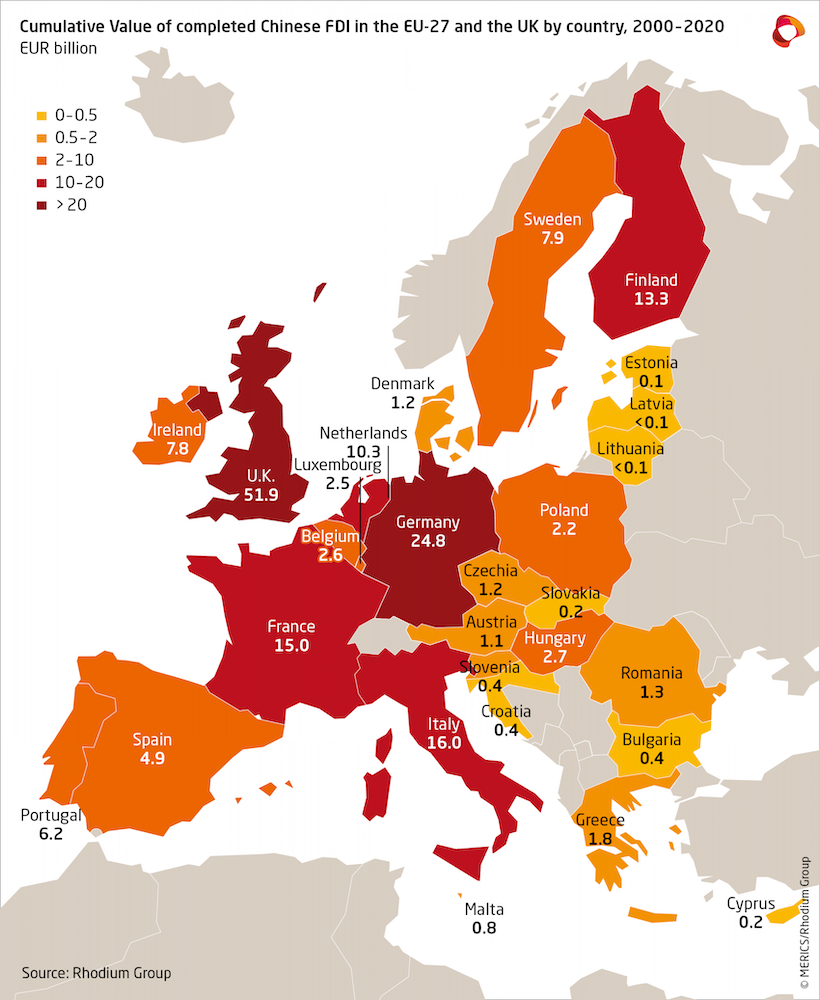
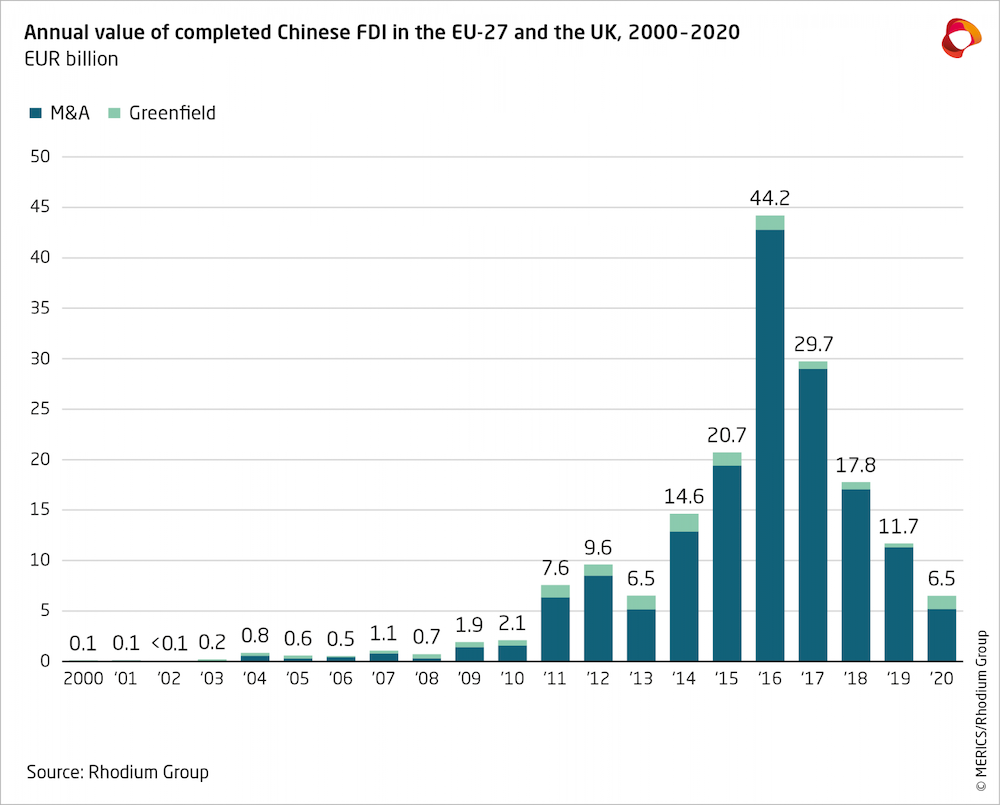
So, we could see a more fragmented world in terms of alignment and standards, for example with (A) EU standards in traded goods and services on the one hand and (B) Chinese standards in infrastructure on the other.
⚠️ What’s important to understand is that investment in the AI industry creates path dependencies: once your data centres, cameras, and cloud are from a specific country, adopting AI governance from another country becomes extremely costly and politically awkward. We’re already challenged by the idea of changing from an Apple MacBook to a Samsung Galaxy Book, so imagine at the scale of national infrastructure…
So, if the EU wants to retain its “Brussels effect” in the AI industry, it must make a more competitive offer than China to the wide range of actors that are involved in all the different layers of the AI stack: builders, like hardware manufacturers and software developers, but also small enterprises, start-ups, consumers, as well as researchers and innovators, and last but not least, independent organisations to hold the industry accountable. This is the EU’s unique advantage: its norm-driven approach.
In sum, the EU’s rule-setting influence (what we scholar call “normative power”) is not enough anymore on its own. The EU must offer investment, public procurement, European software, and regulatory compliance support to have actual leverage in all layers of the AI industry, while communicating very clearly about it both at home and abroad. Time will tell if European leaders take that challenge seriously.
5. What are the implications of securitising AI? Under such a framing, what kind of EU-China cooperation is even possible?
There are many things to unpack from this question.
First of all, what is "securitisation" and why does it matter?
Securitisation is the process of framing a problem as a security issue. It is the social construction of a security threat, which often precedes a change in policy or a new law to address this newly constructed threat. Think about how migration, for example, which can be understood as a cross-cutting issue encompassing social policy, development, labour policy, etc. but which has been framed, constructed as a security issue for political purposes, e.g. by populist parties who seek to gain salience among voters by exploiting public perceptions of existential threats.
Securitisation theory was first conceptualised by the Copenhagen School, arguing that issues become security matters not because they inherently are threats, but because they are presented as such by influential actors (like political leaders or the media), thereby justifying extraordinary countermeasures often outside of normal democratic processes.
In my research, I’ve shown how information challenges (disinformation, fake news, FIMI, etc.) have been securitised in order to pass new laws that would not have been deemed acceptable otherwise, for example an EU-wide ban on Russian state-sponsored media.
Second, what are the implications of securitisation for AI?
Well, security issues, because they are deemed to affect national sovereignty, warrant exceptional decision-making procedures: they are usually faster, but also less transparent or democratic. They involve only a few top decision-makers with limited oversight. The public very rarely has a say in foreign and security policy.
So, if we see AI as a matter of security — which it is to some extent, as we have discussed throughout those questions because of supply chain dependencies, economic vulnerabilities, and dual-use tech — that means we open the door for policies that are aimed to protect national sovereignty, with special decision-making procedures, crisis mechanisms, and emergency politics.
- The good thing is that it allows for states to rapidly protect themselves from AI threats.
- The bad thing is that it reinforces state power in AI leaves citizens outside of those debates, which means less scrutiny and accountability, and personally that’s something that I think is detrimental for the legitimacy and credibility of a liberal democratic actor such as the EU.
This is something that is still quite controversial in both research and policy, but I believe citizens of liberal democracies ought to be better included in discussions on foreign and security policy, which includes AI. Foreign and security policy has often remained outside of scrutiny. But times have changed, and we have now moved from a “permissive consensus” to a “constraining dissensus” in foreign policy, meaning that citizens increasingly challenge and constrain those processes (post-functionalist theory of integration). Remember the Dutch referendum on Ukraine’s EU membership? It is essential that the EU addresses its democratic deficit in the field of foreign and security policy if it wants to remain credible and legitimate player on the global scene, including in AI, with the strong support and unity it needs at home.
Lastly, what to expect in terms of EU-China cooperation when AI is considered a security issue?
I think we can expect the same as has happened for any dual-use technology, which is an effort to agree on international standards that create stability and safety for all, in turn enabling economic growth and further technological progress. I can think of the Biological Weapons Convention, the Treaty on the Non-Proliferation of Nuclear Weapons (NPT), or the Wassenaar Agreement on Export Controls for Conventional Arms and Dual-Use Goods and Technologies.
Simultaneously, we can expect the EU to continue actively seeking to reduce its dependencies on foreign AI supply chains. For example, the EU Chips Act aims to boost European industrial capacity through policy and investment.
What I have observed through my own research, is that the European Commission is increasingly using sanctions as a means to conduct and expand its foreign policy, so I believe we can also expect to see that in the AI industry and EU-China relations.
Further Resources
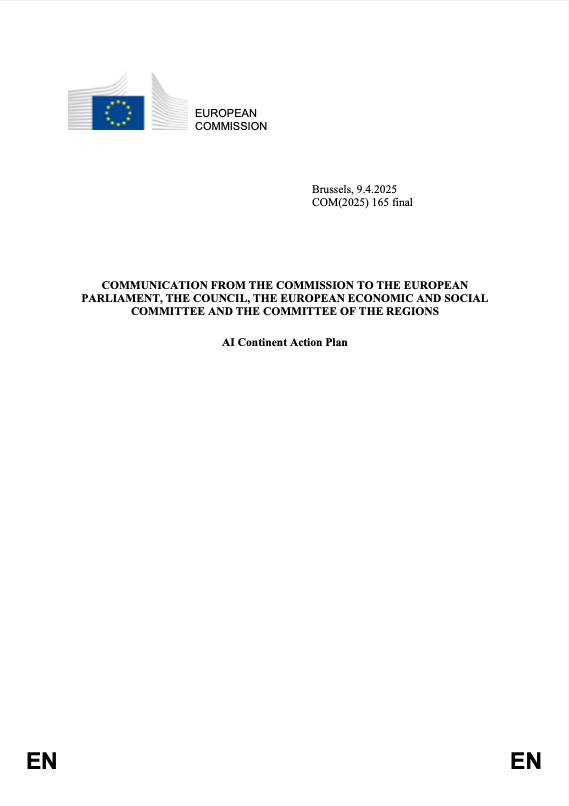
The European Commission's AI Continent Action Plan
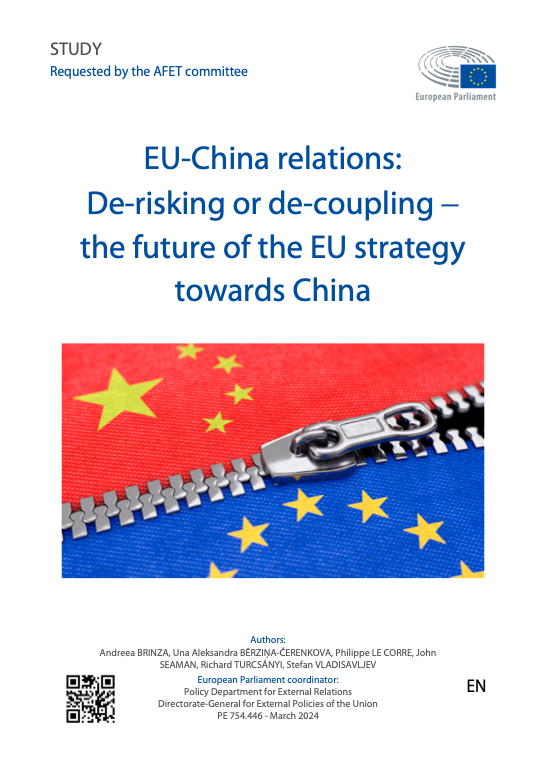
The European Parliament's study on EU-China relations
The European Commission's EU-China Strategy

Hi! I’m Sophie
I am a social scientist and explorer. In my work, I analyse the intersection of politics, technology, and democracy. Nothing makes me happier than learning and discovering the wonders of the world. I consider myself an enthusiastic feminist and self-care advocate.