It’s 4pm on a Sunday. The weather is grim outside, you’re tired, you don’t want to do the chores that await you, and so you grab your phone and open your favourite social media app to distract yourself from the boring reality. Without realising it, you’ve already spent over sixty minutes swiping from cat memes to pictures of starving children in Gaza and reports of peaceful protestors being shot in the US. Doomscrolling. According to the Cambridge Dictionary, it’s “the activity of spending a lot of time looking at your phone or computer and reading bad or negative news stories”. It’s extremely addictive, and yet has clearly negative effects on mental health, not mentioning the time wasted on highjacking your brain to think the world is about to end.
So, what to do instead of doomscrolling? The question might seem silly at first, but when you know that younger generations are chronically stuck on screens, it’s not that easy to break from the habit. You may think you’ll miss out on news, that your friends will forget about your existence, or that you won’t know the latest pop trends, and so the screen and the scrolling creep back into your life before you know it. Smartphones and social media are designed to be extremely addictive, and are especially harmful for men. Fear not. In this article, I’ll give you plenty of inspiration to gently move away from doomscrolling.
Why doomscrolling?
Doomscrolling is the habit of endlessly scrolling through negative or distressing news online, often on social media or news apps. It usually starts innocently, a quick check of headlines, a short break, a moment of boredom, but can quickly turn into long stretches of consuming alarming stories, conflict updates, disasters, and outrage-driven content.
The term reflects both what we are scrolling (doom-laden content) and how we do it: compulsively, even when it makes us feel worse. Doomscrolling can heighten anxiety, fuel pessimism, distort our perception of reality, and drain time and emotional energy. It tricks the brain into believing we are staying informed, while often leaving us overwhelmed, helpless, or emotionally numb.
Part of what makes doomscrolling so powerful is their addictive design. Platforms like Instagram and TikTok are built to keep us hooked, serving emotionally charged content that captures attention and keeps us coming back. Over time, this can turn into a hard-to-break cycle of stress and digital fatigue.
So, what to do instead of doomscrolling?
Below are my trialed and tested strategies to avoid doomscrolling.
Adopt a new time-killing habit
One of the easiest ways to stop doomscrolling is to redirect the urge. Instead of telling yourself “don’t scroll,” try asking: what could I do for five minutes instead? It might be making a cup of tea and drinking it slowly. Opening a window and noticing the sounds outside. Writing three sentences in a notebook. Lighting a candle. Stretching your shoulders. Standing up and looking at something green. Anything at all. Me? Lately I’ve started a mini wetland ecosystem (think, a pond in a bucket) in my patio. Watching and caring for the plants, fish, frogs, and other visitors makes me incredibly happy and encourages me to take short breaks outside.
The goal is not productivity. The goal is to be present and let your mind rest, considering the information you’ve probably already been receiving all day. Think about time-killing habits that help you breathe, like breath work or mediation, or something that makes you move and go outside, like walking or keeping a few plants (or fish, in my case!). This helps activate the vagus nerve that keeps you calm and happy.
Welcome boredom and frustration
Doomscrolling thrives in moments of emptiness or overwhelm. Over time, your brain begins to associate breaks and negative emotions with your phone, as a means to alleviate the discomfort. But your time doesn’t need to be constantly filled, with content or distractions. In fact, the most fantastic of my ideas have always appeared when I do nothing. It’s ok to sit with bad emotions. This is part of the emotional regulation that Becky Kennedy talks about in the video below, and the resilience to frustration that our generation has come to lack:
Open a book
You knew this was coming. Short-form content is killing your brain’s capacity for creativity and critical thinking, defining qualities of this AI-driven century. Long-form content, instead, helps you develop empathy, stimulates your imagination, and opens up new means of communication by showcasing the nuances of language.
Now, I know most people aren’t regular book readers, and that’s ok. There are several ways to extract the unique wisdom of books: summaries, audio books, short novels, or just reading 5 pages at a time. That’s also fine. For short-time readers who struggle to get into books, or can’t seem to get through more than 3 pages, I recommend philosophical novels. One of my ultimate favourites will always be The Little Prince, so simple and yet beautiful. Looking for book recommendations? Here are my top books for personal growth and my five must-read books to understand the world.
Get on Substack
My favourite way of rekindling with critical thinking and literature? Substack. It feels like a thoughtful hybrid between Pinterest and Twitter, but with a deeper, calmer soul. Instead of endless hot takes and click-bait, the platform centres readers and writers, encouraging long-form, reflective, and literary content.
Substack is a space where ideas unfold slowly, in between letters from strangers who think carefully about the world. In a social media ecosystem optimised for outrage and speed, it feels like a quiet library corner, a place to linger, read, think, and rediscover the joy of language. This is the perfect app for people who love to write and read, or those who are curious about that universe. I certainly am finding myself like a fish in water over there!
Learn something new
One of my favourite digital habits is using learning apps. Easy to access, and often gamified to make it easier and more engaging, they can turn spare minutes into moments of fun discovery. I’ve tried and seen learning apps that helped learning languages, coding, computer science, history and art, physics … and more!
Learning apps like Brilliant offer bite-sized challenges that nurture critical thinking and curiosity. Instead of feeding you noise, they reward patience and problem-solving, making progress feel tangible and motivating. There’s something uniquely empowering about opening an app and coming away with a new idea, a sharper skill, or a fresh perspective.
Listen to a podcast
Podcasts are some of the best ways of nurturing your intelligence, with very low effort. You simply need to listen. I love to listen to podcasts while doing something mindless, like commuting, cycling, walking, in bed, at the beach, … the options are endless. Here are a few of my favourites:
Try out creative media apps
On my quest to end doomscrolling, I’ve downloaded new media apps that offer a new take on digital connection and activity. Among my favourites: Pinterest (organise images and ideas in boards), Are.na (collect and share media in archives), Perfectly Imperfect (old internet style recommendations).
Read magazines
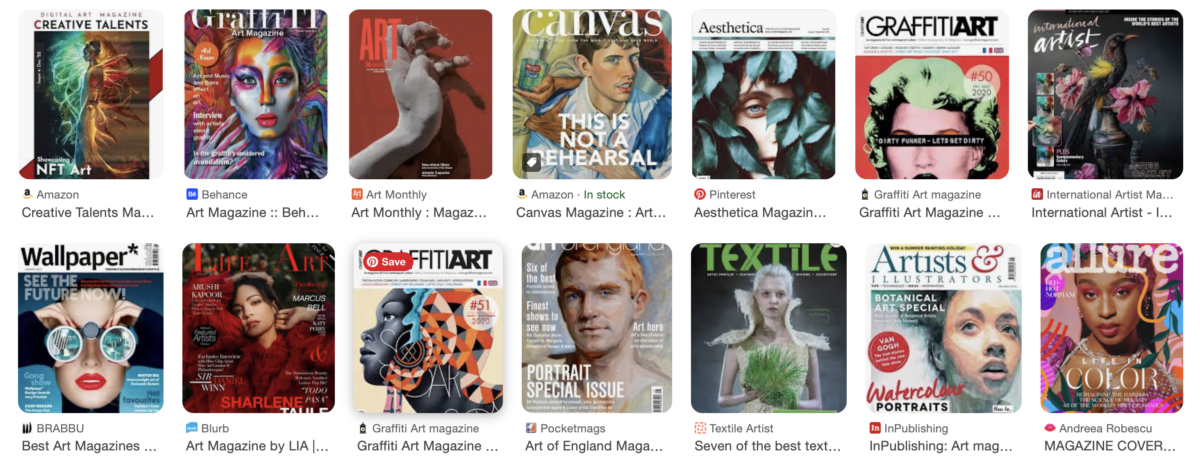
When I first made a conscious step away from doomscrolling and social media, I wanted to go back to read magazines, something I loved doing while I was younger. There’s tons of online and print publications that you can turn to instead of social media, whether you like art, literature, technology, or current affairs. I am a big fan of Atmos (sustainability), Psyche (spirituality) The Paris Review (fiction and poetry), i-D (culture), and Aeon (philosophy).
Conclusion
Doomscrolling won’t disappear overnight, and it doesn’t need to. The goal is conscious choice. Every time you pause before opening an app, every time you reach for a book, a podcast, a creative tool, or simply a moment of boredom, you’re reclaiming a small piece of your attention.
Your mind is not meant to carry the weight of the world’s worst news, twenty-four hours a day. It deserves slowness, depth, play, and sometimes silence. It deserves stories, ideas, beauty, and the space to wander. You don’t have to quit social media entirely. You just have to make room for things that nourish you more than they drain you.
So next time your thumb hovers over the scroll, ask yourself gently: what would feel even slightly more alive right now?Then choose that.
Hi! I’m Sophie
I am a social scientist and explorer. I write about politics, society, wellbeing, and travel. Born and raised in Belgium, I have lived and studied in 5 different countries and love to explore and connect across borders. I consider myself an enthusiastic feminist and self-care advocate.