Five pieces of advice from someone who completed a PhD without losing their mind or passion.
Nobody tells you, when you start a PhD, what you are signing up for. You know it will be long and hard, but you really can’t understand the reality of that difficulty until you are in it. Months of complete inertia and feedback that dismantles your entire research project and confidence will be part of the journey. Along the way will come the creeping suspicion that you have nothing interesting to say and the loneliness of being surrounded by brilliant people who all seem to be fine, when you are not. I know because I’ve been there. PhD burnout is not a personal failure. It is a risk that comes with the length of a process that is isolating and crushing, intensified by a culture that rewards output while rarely acknowledging the human cost of producing it. Most doctoral researchers experience some version of it, but many don’t recognise it until they are already deep inside it and it’s sometimes too late to act.
I completed my PhD at Leiden University, researching how the European Union has responded to disinformation — a subject I found genuinely fascinating and occasionally maddening in equal measure. The process took five years in total, involved over fifty interviews, and produced two peer-reviewed publications, two published book chapters, and a thesis I am genuinely proud of. It was also harder than I expected, and required more deliberate effort to finish it than I had anticipated when I began. What kept me going and what kept burnout at bay was a set of habits and relationships built over time, which I now believe are the foundation of any sustainable doctoral experience.
Keep Your Passion Alive
One of the earliest and least-discussed drivers of PhD burnout is the erosion of the curiosity that brought you to the research in the first place. You started a PhD because something fascinated you. That fascination is your most important resource and it becomes at risk from the moment you begin. Doctoral research has a way of turning the thing you love into the thing you are anxious about: the subject that once lit you up becomes the source of every deadline, every rejection, every crisis of confidence. If you are not careful, you will arrive at the end of your PhD having produced knowledge about something you no longer enjoy thinking about.
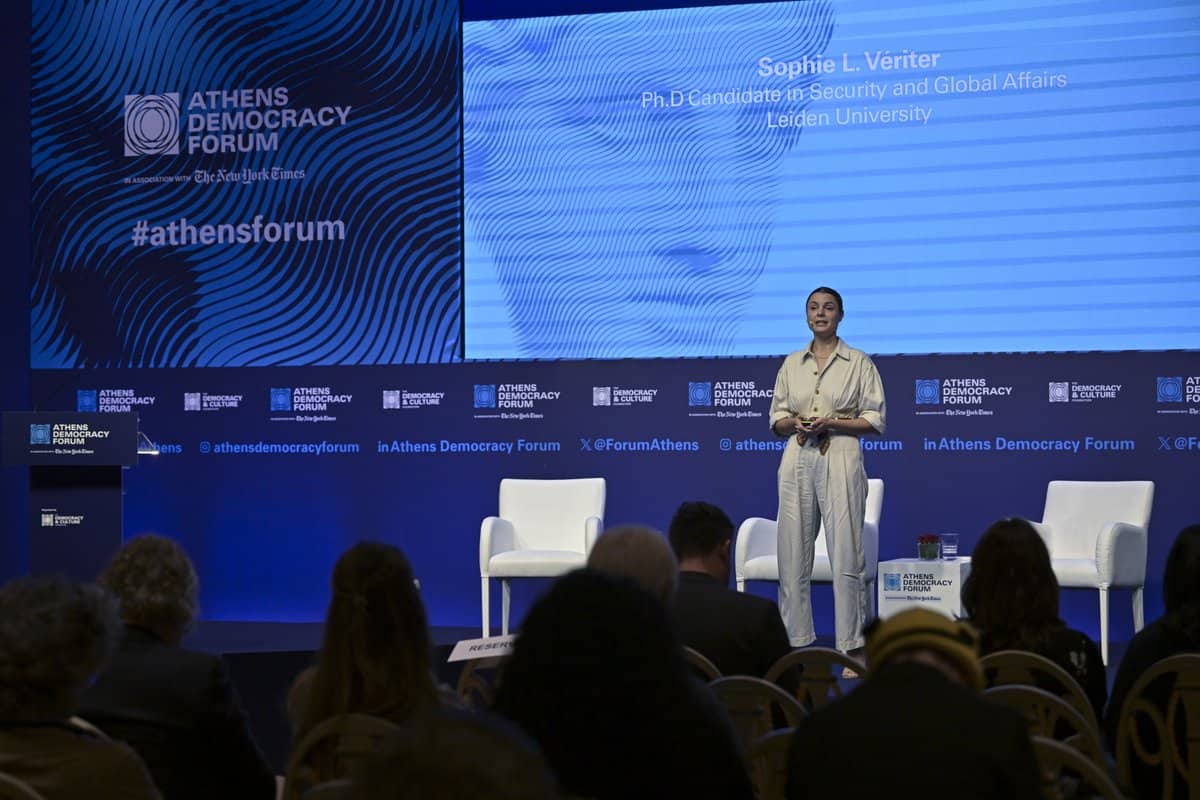
The antidote is to stay connected to your subject in more ways than one. For me, that meant engaging with information integrity not just as an academic question but as a live, urgent, and contested one. I participated in democracy conferences and civic events where the stakes felt real and important. I had conversations about misinformation with people from completely different backgrounds who were thinking about it from angles my academic literature review would have never considered. This kept the curiosity alive. It reminded me why the research mattered and it meant that even in the hardest stretches of the thesis, I was still someone who found the subject fascinating and not simply obliged to write about it.
The practical implication: don’t let your PhD be your only relationship with your research topic. Find the community, the events, the conversations, the debates that connect you to why you cared in the first place. Protecting that connection is one of the most effective things you can do to prevent burnout from taking hold.
Build a Support Ecosystem
Isolation is one of the most reliable predictors of PhD burnout. The remedy is in building a support infrastructure. Inside academia, you need people who can give you real, useful feedback, which means people at different levels of seniority and from different intellectual perspectives. Your supervisors, obviously, but also peers who understand the daily reality of what you are doing. More senior researchers and think tank experts can give you a longer view.
Outside academia, you need people who will help you forget about it entirely. This, for me, was an absolute necessity. A doctoral researcher who cannot disconnect is a doctoral researcher who will burn out, it is almost that simple. The friends who kept me sane during my PhD were people working in tech, in music, in marketing, people whose working lives were completely different from mine, and whose company was a genuine relief. I needed conversations that had nothing to do with epistemology or European institutions or peer review. Through evenings and weekends with my friends outside of university, I was reminded, reliably, that academia is a part of life and not the whole of it.
Build both ecosystems, inside and outside of academia, deliberately. The professional one will make your work better, and the personal one will make you better at doing the work, and far more resilient when the hard periods arrive.
Find Your Rhythm and Protect It
PhD burnout often masquerades as a motivation problem. In my experience, it is more often a structure and discipline problem. When there is no external rhythm imposed on your time, the days can blur and the cognitive load of deciding what to do next adds up in ways that are exhausting. The solution is to work in a way that is actually sustainable.
What I eventually figured out is that I work best in concentrated bursts, during periods when the calendar is clear. Every paper I have published was written during the summer, when most people were on holiday and I finally had uninterrupted time to think. I planned my writing cycles around the period when I knew I would be most productive, rather than fighting against the reality of how I work. On a weekly level, I divided my time between meeting days and deep work days, some days for conversations and collaboration, others blocked for writing. Without that structure, the calendar fills with meetings and the writing never happens, which creates the anxiety that comes from feeling busy without feeling productive. I also exercised regularly and saw a physiotherapist. Physical routines are integral part of productivity: burnout has a physical dimension, and the body needs as much tending as the mind.
Find the conditions in which you do your best work. Organise your life to create those conditions as often as possible. Protect that structure with more seriousness than you protect almost anything else.
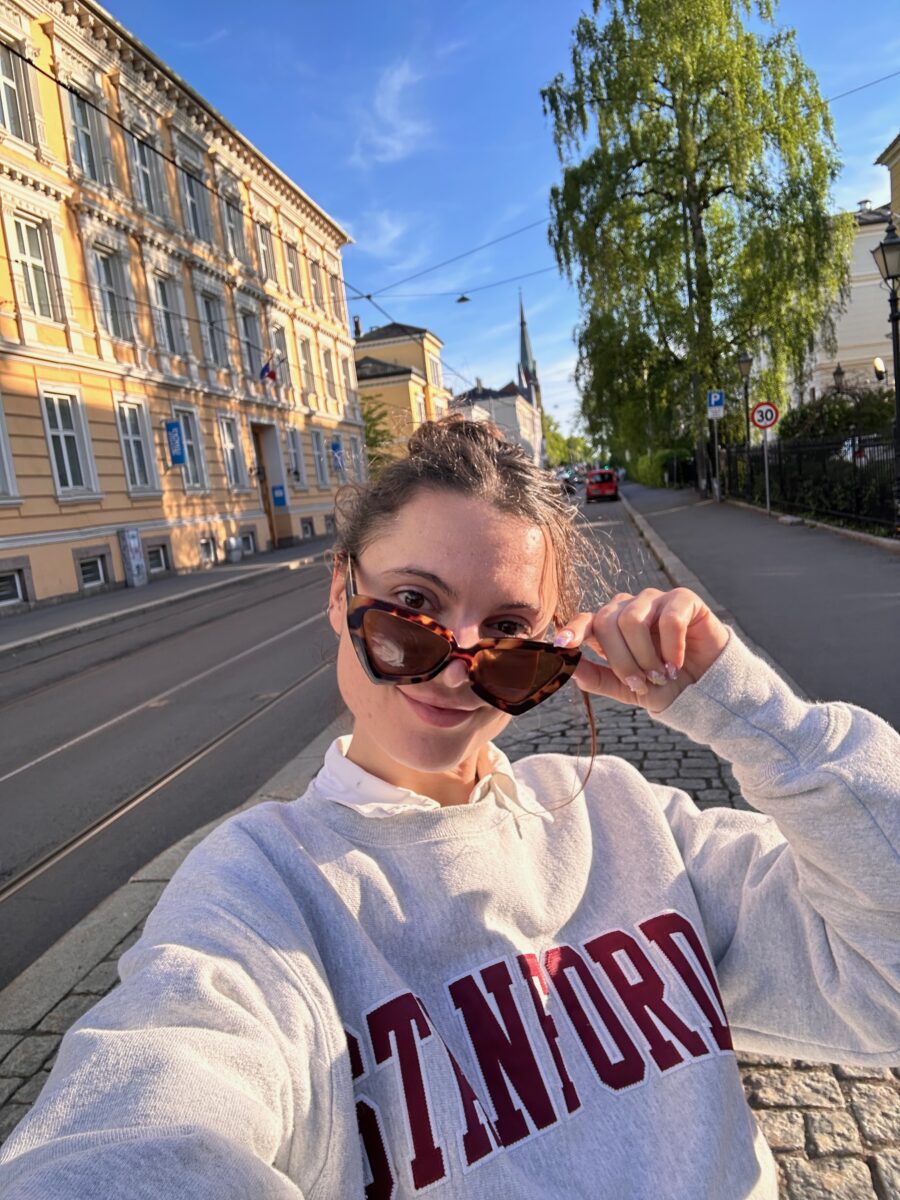
Hi! I’m Sophie
I am a social scientist and explorer. In my work, I analyse the intersection of politics, technology, and democracy. Nothing makes me happier than learning and discovering the wonders of the world. I consider myself an enthusiastic feminist and self-care advocate.
Focus on Output
One of the causes of PhD burnout is the feeling of going nowhere, or having achieved nothing. When the end point is years away and progress is hard to measure, it is easy to lose the sense that you are actually moving. The solution is to make the work measurable. For me, that meant focusing on concrete outputs — papers and conferences — rather than the more diffuse goal of “making progress on the thesis.” Papers have deadlines and a clear moment of completion. Conferences have dates you have to meet. These external structures create urgency and accountability that the open-ended nature of doctoral research doesn’t naturally provide.
I submitted my first paper at the very beginning of my PhD. It was not perfect, but it was done, and it taught me something about the publishing process that no amount of preparation could have substituted for. Each subsequent paper was better, not because I waited until I was ready, but because I wrote them. Output is how you get better at producing output. This approach also does something important for motivation: in a process where the end point is years away, being able to point to something produced (a paper accepted, a conference presentation given, a chapter submitted,…) creates a rhythm of achievement that keeps the work moving. The PhD felt long and it also went quickly, because I was busy making things.
Do not wait until your work is ready. Make it ready by doing it. Progress is one of the most effective antidotes to burnout there is.
Have fun!
This might sound like the least serious piece of advice but it is probably the most important one. PhD burnout accelerates when the doctoral experience becomes your entire identity: when the thesis is who you are, every setback becomes an existential one and the psychological weight of the work becomes unbearable. The counter is to build a life that is bigger than the PhD.
My doctoral years were some of the most exploratory and genuinely enjoyable of my life. I participated in scholarship programmes and international exchanges. I developed my own consulting practice. I built things that had nothing to do with my thesis. The freedom of doctoral life is real, but it is temporary. Use it. Pursue the side project, attend the event that doesn’t obviously serve the thesis, take the opportunity that arrives unexpectedly. A PhD woven into a rich and varied life is more sustainable, more enjoyable, and perhaps counterintuitively produces better research, because the researcher doing it is more alive.
You are not just becoming a researcher during these years. You are becoming a person. Pay attention to both.
Final Thoughts on PhD Burnout
PhD burnout is common, it is real, and it is nothing to be ashamed of. It is also, in many cases, preventable or at least manageable, if you treat your sustainability as seriously as you treat your research. As Wellbeing, Inclusion, Diversity, and Equity Representative at my faculty, I saw people go from desperation to powerful breakthrough in just a few months.
The five things above are not a guarantee but they are what worked for me, and what I have seen work for others. The PhD is hard in ways that are difficult to articulate to people who haven’t done one, and wonderful in ways that are equally hard to describe. If you are currently in the middle of a PhD and finding it harder than you thought, you are not doing it wrong. You are doing it.
If you are navigating a difficult period in your doctoral research, whether that’s burnout, a writing block, a crisis of direction, or simply not knowing what kind of support you need, I offer academic coaching tailored to researchers at every stage. Start with a free discovery conversation: no obligation, and a useful hour in itself.
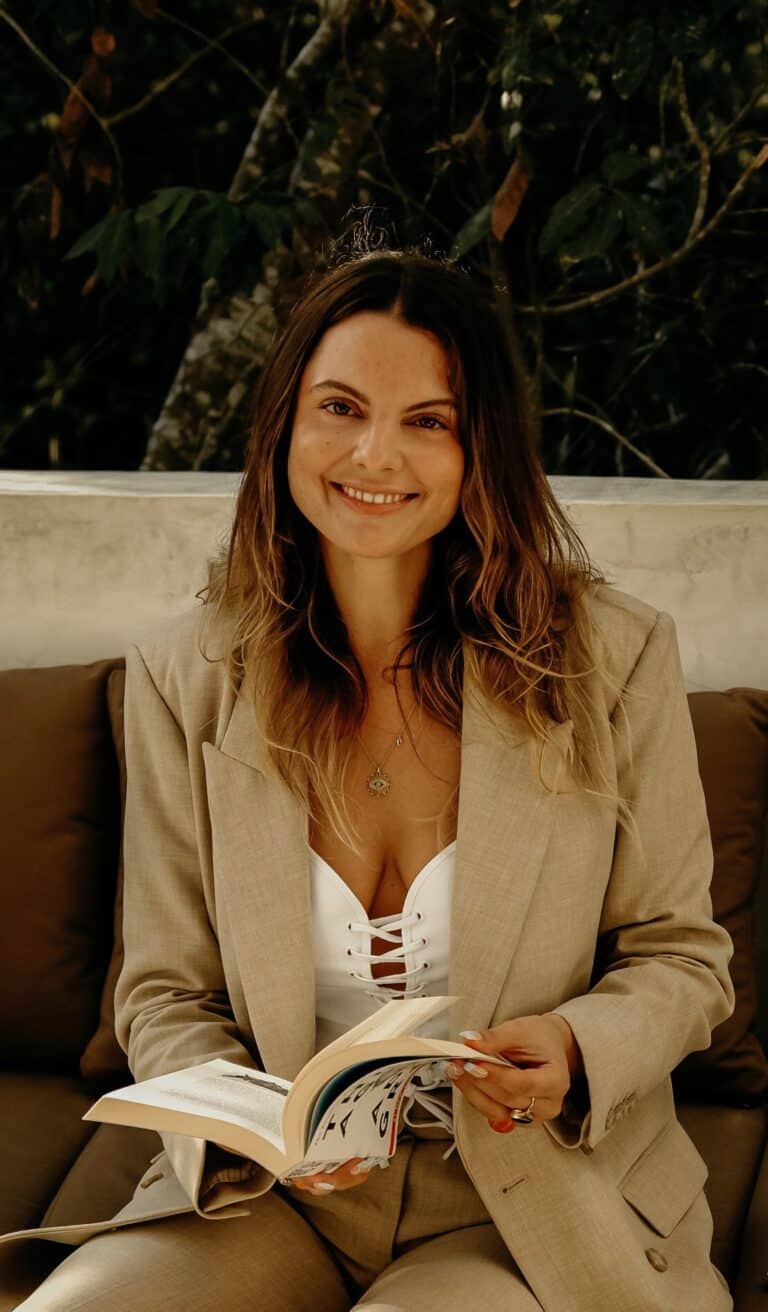
Let's dive in together!
I would love to accompany you on your PhD journey. Together, we’ll define your goals, tackle blockers, and build the strategies that will carry you through.
My approach builds on a decade of researching, publishing, and navigating academic life across disciplines and institutions, working alongside doctoral researchers who are ambitious, curious, and determined to make their PhD count.