
Editorial Consulting
Your ideas deserve the words that do them justice.
What is Editorial Consulting?
Editorial consulting is a strategic form of editorial support that goes beyond correcting errors or improving sentences. An editorial consultant works with you on the larger questions: Is the argument coherent? Is the structure serving your ideas? Does the piece speak to its intended audience? Is the voice consistent and distinctive? Is the content doing what you need it to do?
Where a copy editor fixes what’s on the page, an editorial consultant helps you think through what should be written, how, and why. The relationship is part critique, part strategy, and part craft development. It’s one of the most valuable things a writer can invest in.
Editorial consulting applies across an unusually wide range of contexts: academic researchers preparing manuscripts for journal submission, professionals developing thought leadership content, authors at work on books or long-form essays, organisations producing reports, policy papers, or public communications, and individuals who write regularly and want their work to reach a higher standard.
What Does an Editorial Consultant Actually Do?
The scope varies depending on the project and the client, but editorial consulting typically involves:
Structure
Before any line-level editing, an editorial consultant looks at the architecture of a piece. Does it open well? Is the argument sequenced logically? Are there gaps, redundancies, or sections that undermine each other? Getting the structure right is often the difference between a piece that convinces and one that merely informs.
Argumentation
For academic, policy, or non-fiction writing especially, the quality of the argument matters as much as the quality of the prose. An editorial consultant reads critically, asking whether claims are supported, whether the logic holds, whether the conclusions follow from the evidence.
Voice
Every piece of writing exists in a context, and the register (the level of formality, the tone, the degree of technicality,…) needs to match that context precisely. An editorial consultant helps ensure that your voice comes through clearly, and that the register is right for your audience.
Positioning
Who is this for, and does it reach them? An editorial consultant thinks about the reader as actively as about the writer, assessing whether the piece communicates, persuades, or moves its intended audience.
Revisions
Rather than simply marking up a draft, an editorial consultant typically provides a structured memo or feedback document that explains what needs to change and why, giving the writer the tools to revise with understanding rather than guesswork.
Partnership
For longer projects such as a book, a series of essays, or a grant application, editorial consulting can be an ongoing relationship across multiple drafts and stages, building toward a final version that is genuinely strong.
What Types of Writing Does Editorial Consulting Cover?
Editorial consulting applies across a broader range of formats than most people assume. Common projects include:
- Academic writing: journal articles, book manuscripts, PhD theses, grant applications, fellowship statements, and research proposals. Academic writing carries specific conventions (argument structure, citation practices, the expectations of peer review) that require an editorial consultant with direct experience in research contexts.
- Policy and professional writing: reports, white papers, briefings, position papers, and policy proposals. These documents need to be analytically rigorous and immediately readable by non-specialist audiences, a balance that is harder to strike than it looks.
- Essays and long-form non-fiction: personal essays, public-facing intellectual writing, journalistic long-form, and creative non-fiction. These formats live or die by voice, structure, and the quality of the ideas, all areas where editorial consulting adds the most value.
- Professional communications: thought leadership content, op-eds, speeches, organisational communications, and writing for digital platforms. Here the question is often as much about positioning as prose.
- Books and book proposals: whether at the outline stage, mid-draft, or preparing a completed manuscript for submission to agents or publishers.
How it works
My consulting services always begin with a free scoping call (15 min) and a thorough intake consultation (90 min). Afterwards, we tailor a range of services based on your needs .
free scoping call
We discuss your situation, your goals, and your audience. I tell you honestly whether and how I can help. No commitment required. Book here.
intake consultation
We map your positioning, assess your existing work, identify gaps and opportunities, and build a strategic roadmap specific to you.
deployment
Strategic sessions, feedback, and content revisions, building your editorial voice progressively with tools and frameworks you can use independently.
I prioritise writers from developing countries, marginalised communities, and low-income backgrounds in my work. If you identify or you think you may identify with this, please do ask about discounted prices and special offers.
Nice to meet you, I’m Sophie
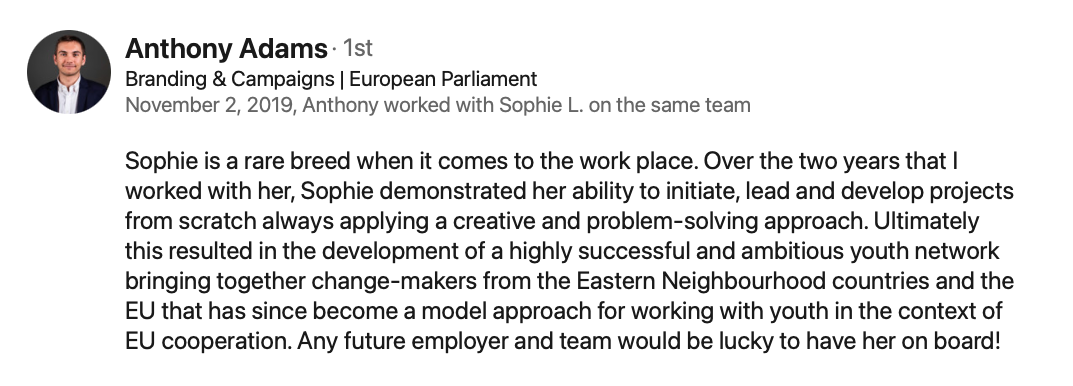
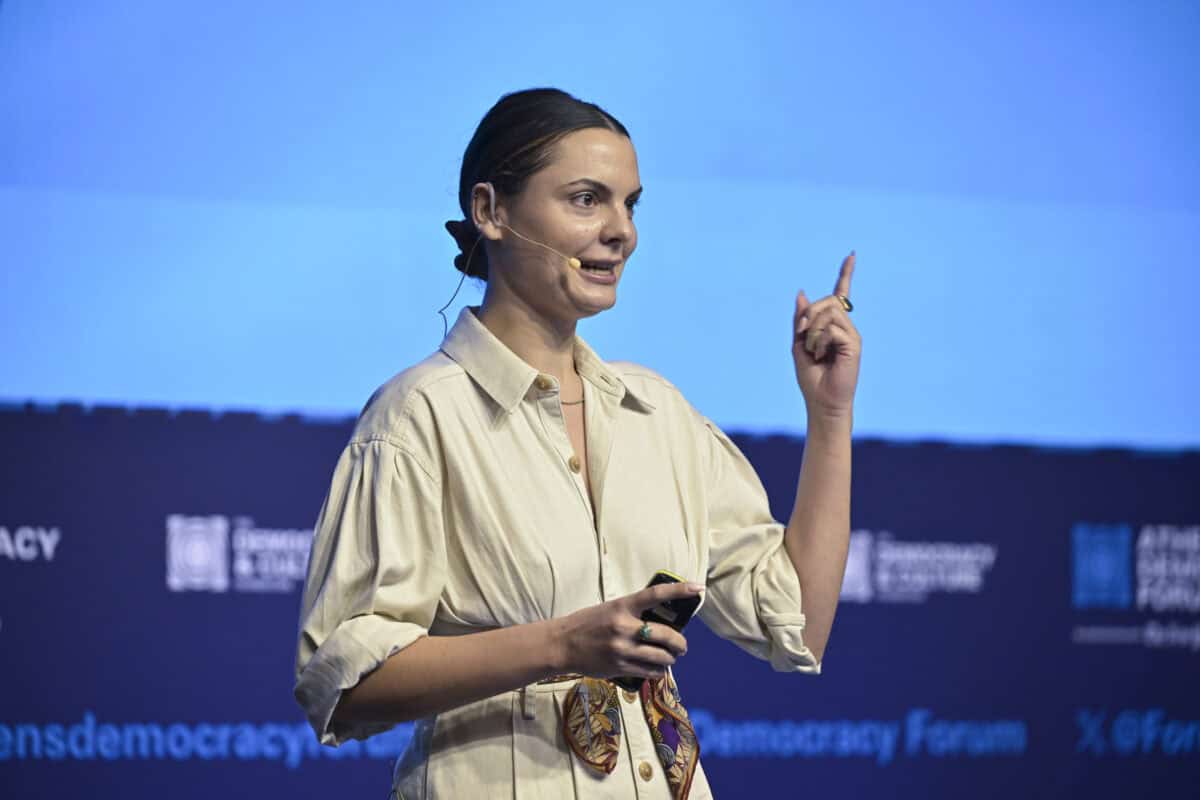
I am a political scientist, researcher, and writer who has spent a decade translating complex ideas for public audiences in peer-reviewed journals, at international conferences, and at sophiepomme.com, where over 9,000 monthly readers come for inspiration and analysis.
Pricing
Every engagement begins with a free 15-minute scoping call, followed by a flat-rate intake consultation (90 min, 250€). From there, my editorial consulting is billed at a single rate of 120€/hour and will be invoiced monthly.
- First scoping call (15 min) — free
- Intake consultation (90 min) — 250€
- All subsequent work — 120€/hour
Frequent Questions
What's the difference between an editorial consultant and a copy editor?
A copy editor works at the level of the sentence, e.g. fixing grammar, spelling, punctuation, and consistency. An editorial consultant works at the level of the whole piece, e.g. assessing argument, structure, voice, and audience. Both are valuable, but they address very different problems. If your sentences are well-constructed but the piece isn’t working, you need an editorial consultant, not a copy editor.
Do I need to have a finished draft to work with an editorial consultant?
Not necessarily. Some clients come with a complete manuscript; others come with a detailed outline or a first draft they know needs significant work. The entry point depends on what would be most useful. An early-stage structural conversation can save significant time and effort in later drafts.
Can you help with academic writing specifically?
Yes. I have direct experience in academic research contexts, producing peer-reviewed publications and navigating the editorial conventions of academic journals, which means I can assess academic writing from the inside, not just as a general editor. This includes argument structure, literature positioning, methodological framing, and the specific expectations of peer review.
What does a manuscript review typically involve?
I read your text in full, assess it at the level of argument, structure, register, and audience, and produce a detailed feedback memo. Depending on what’s useful, I also annotate the text directly with specific observations. The memo explains what is working, what isn’t, and why, so that you can revise with understanding rather than simply following instructions.
Can you edit in English if I'm not a native speaker?
Yes. Many of my clients write in English as a second or third language. Working across linguistic and cultural registers is something I find genuinely interesting. We can address clarity, idiomatic fluency, and register without flattening the particular voice you bring to your work.
How is editorial consulting different from using an AI editing tool?
AI tools can catch surface errors and suggest alternative phrasings and there is nothing wrong with using them as part of a writing process. What they cannot do is read your argument critically, understand your audience, assess whether your structure is serving your ideas, or tell you whether your voice is coming through. Editorial consulting is a thinking relationship, not a text-processing service.
Do you offer one-off reviews without an ongoing commitment?
Yes. A single manuscript review is a perfectly valid and common engagement. Some clients use it for a specific high-stakes document; others use it to get a clear picture of where their writing stands before deciding whether ongoing support would be useful. There is no pressure to commit to more than you need.
How do I get in touch?
Through the free consultation booking link. I respond to all enquiries personally and aim to reply within 48 hours. All engagements begin with a free discovery conversation. No obligation and a useful conversation in itself.
My personal experience
I am a political scientist, researcher, and writer based in The Hague. I hold an MPhil from Oxford and a PhD from Leiden, and have spent a decade advising governments and European institutions on strategic communications and information policy. I created the Young European Ambassadors initiative for the European Commission (now active across 34 countries with 2,500+ members). I am the Founding Director of the Global Society Foundation and have spoken at over 200 international events. I write publicly at sophiepomme.com, where I have built a readership of 9,000 monthly readers. I know what it takes to make rigorous thinking reach the people who need it because I do it myself, constantly.
Subscribe
for a monthly round-up of the latest advances in technology and global affairs, tips to thrive in academia, resources to support your personal growth, and more!
Latest Blog Posts

Prediction Markets Promise Public Value. Can They Deliver?
Unless you’ve been living under a rock, you heard of prediction markets and of the controversies linked to insiders who made profits on wars and

Silvia Salis, Techno, and the Politics of the Dance Floor
I used to call myself a party animal and, deep inside, I still am. There’s something about the process of getting ready with a bombastic

The 5 Communications Trends Turning 2026 into a Reckoning
Eroding trust, surging creators, dead search traffic, and AI rewriting everything: here are the communications trends defining 2026.

What to do instead of doomscrolling?
What to do instead of doomscrolling: practical, gentle alternatives to reclaim your focus, time, and mental wellbeing.

The Truth about “Truth”: Facts, Fiction, and Feelings in Politics
Can we separate facts from fiction? A reflection on truth, emotion, and the search for common ground in modern politics.

Reshaping Europe’s Destiny: Eric Tak on the Digital Euro
Discover how the digital euro could transform European payments and sovereignty in this interview with ECB’s Eric Tak.
Subscribe
Receive my latest articles, what I’m currently reading and listening to, and my favourite resources directly in your mailbox, once a month.